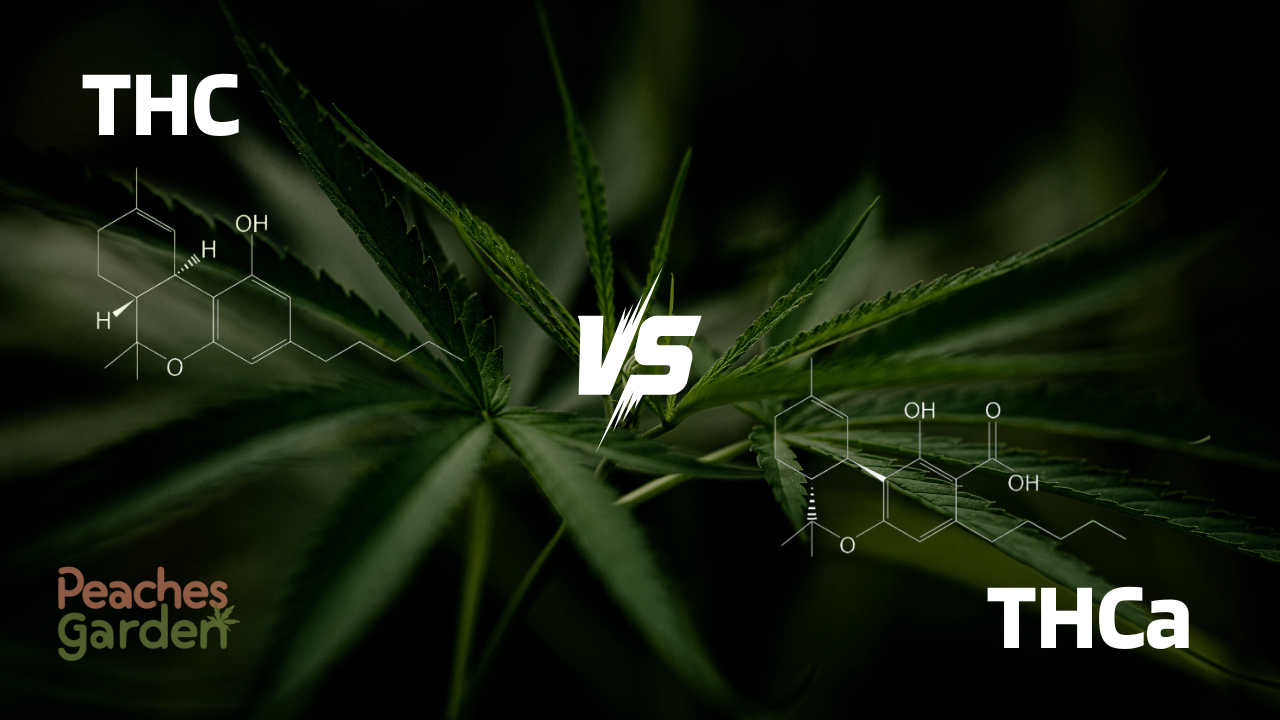
Cannabis comes packed with naturally occurring compounds—cannabinoids—that shape how the plant affects the body. Among these, THC (delta-9-tetrahydrocannabinol) and THCa (tetrahydrocannabinolic acid) often cause confusion for new and seasoned consumers alike.
Many people assume THC and THCa are the same thing—but they aren’t. They interact differently with your body, produce different effects, and even fall under different legal guidelines in some regions. Understanding the difference helps you make better buying decisions—whether you’re choosing flowers, concentrates, edibles, or tinctures.
Let’s dive deep into what THCa really is, how it compares to THC, and why both matter in the cannabis world.
What Is THCa (Tetrahydrocannabinolic Acid)?
THCa is the raw, non-psychoactive precursor to THC. It is found in fresh cannabis flowers before they undergo heat exposure.
In other words:
- Raw cannabis = high THCa
- Heated cannabis = high THC THCa itself does not produce a “high.” It only becomes psychoactive when heated and converted into THC. This conversion process is known as decarboxylation. How THCa Is Formed Cannabis plants produce cannabinoids in acidic forms. THCa forms in the trichomes (the frosty crystals on buds) as the plant matures. Only when heat is applied does THCa drop a carboxyl group (COOH) and turn into delta-9 THC. THC vs THCa: What’s the Difference?
Here’s a clear comparison:
Comparison Table: THC vs THCa
Feature
Psychoactive? Found in
How it’s created Effects
Common uses
Legality Activation method
THCa
Naturally in the plant
No intoxication
Raw consumption, medicinal formulations, THCa flower markets
Often legal when labeled as THCa (varies by state) Requires heat to turn into THC
THC
Yes Heated/decarboxylated cannabis
Created when THCa is heated Classic cannabis “high” Smoking, vaping, edibles, tinctures
Controlled in most regions Already active
No
Raw, fresh cannabis
How THCa Turns Into THC: The Decarboxylation Process
When cannabis is exposed to heat, THCa loses a carbon dioxide molecule and becomes THC. This happens through:
- Smoking
- Vaping
- Cooking
- Baking edibles
- High heat curing Decarboxylation Breakdown Table
Temperature
~220–240°F (105–115°C)
Smoking temperatures (600°F+)
Vaporizing (350–400°F)
This is why a raw cannabis bud high in THCa becomes psychoactive when smoked.
Time
30–45 minutes
Result
THCa becomes THC
THCa rapidly converts to THC
Instant Instant
Efficient conversion with smooth vapor
Why THCa Flower Is So Popular
In many legal markets—especially in the U.S.—THCa flower surged because it can legally be sold as hemp if it meets delta-9 THC limits before combustion.
However, once you smoke THCa flower, it becomes THC flower. This loophole has fueled demand for THCa-rich strains that deliver the same potency as traditional high-THC cannabis.
Benefits of THCa Flower
- Legal in many hemp markets
- Same effects as traditional THC when smoked
- Often fresher and terpene-rich
- Used by consumers who want strong potency Does THCa Get You High? Raw THCa = No
Heated THCa (converted) = Yes If you ingest THCa raw—such as juicing cannabis leaves—you won’t experience psychoactive effects. But when you smoke, vape, or dab THCa products, they convert into THC and produce the familiar high. Potential Benefits of THCa Research around THCa is still in early stages, but some users and preliminary studies suggest it may support:
- Inflammation reduction
- Nausea relief
- Appetite support
- Neuroprotective benefits These effects are not guaranteed, and more research is needed, but THCa continues to gain credibility in the wellness space.
Which Products Contain THCa?
THCa shows up in several categories:
1. THCa Flower
Fresh, cured cannabis flower rich in THCa but low in delta-9 THC until heated.
2. THCa Diamonds
Highly concentrated crystalline THCa—extremely potent when dabbed.
3. Raw Cannabis Juice
Unheated cannabis leaves and flowers blended into juice or smoothies for non-psychoactive consumption.
4. THCa Tinctures
Extracts designed for wellness benefits without intoxication when consumed raw.
THC vs THCa Potency: Understanding Lab Labels
When reading product labels or lab tests, you may see:
• THCa%
• THC%
• Total THC
How Total THC Is Calculated
Because THCa converts into THC, labs use the following formula:
Total THC = THC + (THCa × 0.877)
This helps determine how potent the product will be once heated.
FAQ: THC vs THCa
1. Does THCa turn into THC when smoked?
Yes. Heat instantly converts THCa to THC, which is why THCa flower gets you high.
2. Is THCa legal?
In many regions, THCa is legal if delta-9 THC levels stay within the allowed limit. But laws vary by state/country.
3. Can THCa get you high if eaten raw?
No. Raw THCa does not cause intoxication without heat activation.
4. What is the main benefit of THCa?
THCa offers potential anti-inflammatory and therapeutic benefits without psychoactive effects.
5. Is THCa stronger than THC?
Once heated, THCa becomes THC. So potency depends on the final converted amount.
6. Do edibles contain THCa?
Edibles are typically made using decarboxylated cannabis, so they contain active THC, not THCa.
7. Why do lab results show high THCa but low THC on flower?
Because raw flower hasn’t been heated yet. Once smoked, that THCa converts to THC.
Final Thoughts
THC and THCa play essential but different roles in the cannabis experience. THCa remains non- psychoactive until heated, making it an intriguing option for both wellness users and recreational consumers seeking high-potency flower in legal gray markets.
Understanding how THCa works—and how it becomes THC—helps you choose the right products based on your needs, whether that’s wellness support, high-potency smoking options, or legal compliance.