Cannabis has evolved into a world of diverse strains, each offering its own personality, effects, aroma, and therapeutic potential. Whether you’re a medical patient seeking targeted relief or a recreational consumer chasing a specific vibe, the choice between Indica, Sativa, and Hybrid strains can shape the entire experience. With thousands of cultivars on the market, understanding strain categories is the first step toward finding what truly fits your lifestyle. This guide dives deeply into the science, effects, cultural history, and everyday usability of each cannabis type—helping you match strains to energy levels, mood goals, creative tasks, self-care routines, and wellness needs.
Understanding Cannabis Strains: Why Do Types Matter?
Cannabis strains differ due to genetics, terpene profiles, and cannabinoid concentration, all of which influence how the plant interacts with your body. Historically, cannabis plants were categorized by their physical traits. Over time, breeders cross-pollinated genetics to create hybrids—rendering today’s market an intricate spectrum of strains rather than three cleanly separated groups. Yet, Indica, Sativa, and Hybrid remain useful guides for predicting general effects. While individual experiences vary, the categories help consumers anticipate whether a strain will energize, relax, or balance their mood. As cannabis legalization expands, lifestyle-based consumption has become the norm—people choosing strains for work, creativity, recovery, fitness, sleep, and even social events.
What Is Indica? The Relaxing, Body-Centered Experience
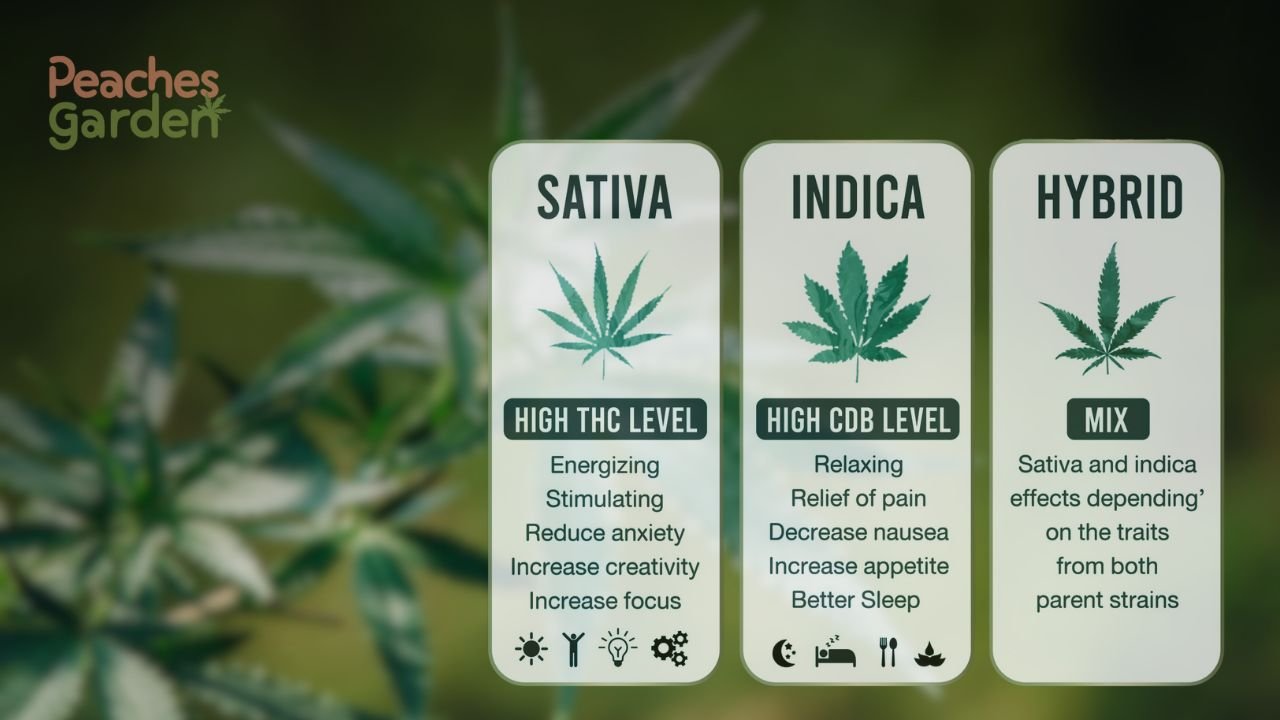
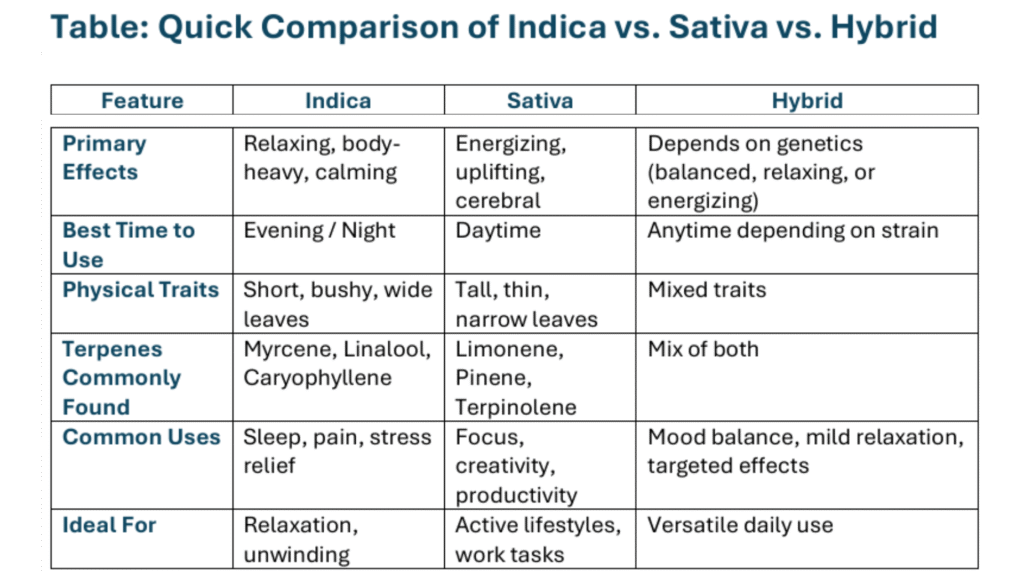
Indica strains are traditionally associated with full-body relaxation, deep calm, and soothing sensations. Originating from colder mountainous regions like Afghanistan, Pakistan, and Tibet, Indica plants developed thick, resinous flowers and broad leaves to protect themselves from the harsh climate.These same characteristics now provide users with dense buds rich in cannabinoids. Indica strains typically produce effects such as muscle relaxation, heavy body sensations, and mild sedation, making them ideal for nighttime use.Indica is often preferred by people dealing with chronic stress, insomnia, anxiety, or physical discomfort. Many athletes and medical patients choose Indica strains to unwind after long days or intense workouts. Because these strains slow mental and physical tension, they pair well with activities like watching movies, meditating, reading, or simply getting ready for bedtime. Their terpene profiles often feature myrcene, linalool, and caryophyllene, known for calming and anti-inflammatory properties.
What Is Sativa? The Uplifting, Energy-Boosting Option
Sativa strains are known for their cerebral, energizing, and uplifting effects. Originating from warm climates such as Africa, Southeast Asia, and Central America, Sativa plants grow taller, with narrow leaves and airy buds—traits that help them handle high humidity. These genetics translate into a lighter, smoother experience, often accompanied by bursts of creativity, improved focus, and heightened sensory perception.Sativa is the preferred category for people who want to stay active, productive, or social. Artists, designers, students, and professionals often choose Sativas to boost creativity during brainstorming sessions or maintain a balanced mood while handling daily tasks. Because Sativa activates the mind rather than relaxing the body, users often describe feeling motivated, happy, talkative, and mentally refreshed. These strains frequently contain terpenes such as limonene, pinene, and terpinolene, which contribute to alertness, bright flavors, and mood elevation.
What Are Hybrid Strains? The Best of Both Worlds
Hybrids dominate today’s cannabis market because they combine traits from both Indica and Sativa parents. These strains are carefully bred to achieve specific effects—some hybrids lean Indica (more relaxing), others lean Sativa (more energizing), while many remain balanced. This versatility allows hybrids to meet highly personalized lifestyle needs, making them the go-to choice for consumers who want tailored experiences rather than single-effect strains.Balanced hybrids are ideal for those who want both mental clarity and physical ease without feeling overly sedated or overly stimulated. The effects often blend the best of both categories: relaxation without couch-lock, energy without anxiety, and mood balance without emotional intensity. Hybrids are also popular for medicinal use because breeders can fine-tune cannabinoid ratios to target conditions like inflammation, migraines, pain, appetite loss, or mood disorders.
How to Choose the Best Cannabis Type for Your Lifestyle
Choosing the right strain begins with identifying your personal goals, moods, and environmental context. Someone looking for stress relief after work may gravitate toward Indica, while someone preparing for a brainstorming meeting might prefer Sativa. Hybrids offer a middle ground for those who want both comfort and clarity. Consider the following lifestyle questions: Do you need cannabis to help you sleep, or do you want it to energize your mornings? Are you looking to enhance creativity or unwind quietly at home? Are you someone who favors subtle experiences or intense sensations? By answering these questions, you can determine which strain category aligns with your daily rhythms, responsibilities, emotional needs, and wellness goals.
Another factor is tolerance level. New users often benefit from balanced hybrids because they provide a gentle introduction. Experienced consumers may explore high-THC Sativas for strong mental stimulation or heavy Indicas for deep relaxation. Terpene preferences also matter—citrusy, fruity, earthy, floral, or spicy aromas hint at the effects a strain may offer.
Terpenes: The Secret Behind Strain Effects
While cannabinoids like THC and CBD get most of the attention, terpenes play a critical role in shaping cannabis experiences. These aromatic compounds influence flavor, scent, and physiological impact. For example:
• Myrcene promotes calm, sedation, and muscle relaxation.
• Limonene boosts energy, mood, and stress relief.
• Pinene enhances focus and mental clarity.
• Linalool provides anti-anxiety and anti-stress benefits.
Understanding terpenes helps consumers choose strains more precisely rather than relying solely on Indica or Sativa labels. Many experts argue that terpenes determine effects even more strongly than THC percentage alone, which is why the same category of strain can feel different across brands.
Medical Benefits of Each Cannabis Type
From chronic pain to anxiety disorders, different strains support different wellness needs. Indica strains are widely used for sleep disorders, muscle spasms, PTSD, and severe pain. Their relaxing effect provides relief to people with chronic health conditions who need nighttime comfort. Sativa strains can support individuals with depression, ADHD, fatigue, and mild stress by encouraging alertness and
positivity. Hybrids, especially balanced ones, are often recommended for daily medical use because they offer relief without overpowering sedation or overstimulation. Patients with inflammatory conditions, migraines, mood swings, or appetite issues often find hybrids reliable and consistent.
Indica vs. Sativa vs. Hybrid for Everyday Activities
Different lifestyles demand different cannabis choices. If you work long hours and need relaxation at night, Indica supports recovery and calm. If your job requires creativity or long focus sessions, Sativa can stimulate ideas and keep you mentally sharp. People with active lifestyles—gymgoers, travelers, or outdoor enthusiasts—often mix strains depending on the day. Social users tend to pick Sativa or Sativa leaning hybrids to stay talkative and uplifted during gatherings. Those who enjoy a balanced emotional experience often prefer hybrids for daily routines, mixing mild euphoria with physical ease. Matching strains to activities ensures that cannabis enhances rather than disrupts your flow.
Frequently Asked Questions (FAQs)
1. Which cannabis type is best for beginners?
Beginners often do well with balanced Hybrids because the effects are moderate and predictable.
2. Is Indica only for nighttime and Sativa only for daytime?
While this is a helpful guideline, it’s not a strict rule. Some Indica’s are mild enough for daytime relaxation, and some Saliva’s are gentle enough for evening creativity. Always check terpene and cannabinoid profiles.
3. How do Hybrids differ from pure Indica or Sativa?
Hybrids combine genetics from both Indica and Sativa strains, giving users a blend of physical, mental, and emotional effects. They provide versatility and more personalized experiences.
4. Which strain type is best for anxiety?
Many users report relief from Indica or Hybrid strains containing calming terpenes like myrcene and linalool. However, effects vary by person—some may find Sativa helpful for uplifting mood without sedation.
5. What’s more important: THC percentage or strain type?
Strain type and terpene profile matter more than THC alone. High THC does not automatically mean stronger or better effects. Balanced THC with beneficial terpenes often delivers a smoother experience.
Final Thoughts
In the modern cannabis world, you’re not just choosing a plant—you’re choosing an experience. Indica offers tranquility, Sativa brings energy, and Hybrids deliver personalized balance. The best choice depends on your lifestyle, mood, and goals. As cannabis science evolves, consumers can now tailor their experience with more precision than ever before. Whether you seek creativity, rest, relief, or harmony, understanding your preferred strain category helps you elevate your sessions with intention and confidence.